A beat sheet is a short list of the key story beats of a screenplay, in order, usually one or two sentences each. To build one, you name the main turning points of your story, place them on a timeline, and check that each one changes the situation for the protagonist. Done well, it fits on a single page and lets you see the shape of the whole script before you write sixty pages in the wrong direction.
What a beat sheet is and why writers use it
A "beat" is a unit of story change: something happens, and the protagonist's situation, knowledge or goal is different afterwards. A beat sheet lists these changes without dialogue, description or stage business. It sits between a logline and a full scene-by-scene outline: more detailed than the former, much shorter than the latter. If you are still shaping the premise, start with a logline first, since a beat sheet is hard to write for a story you cannot yet state in one sentence.
Writers use beat sheets for three practical reasons. They expose structural problems early, when fixing them costs an afternoon rather than a rewrite. They give collaborators, producers and script editors something short to react to. And they make a draft easier to start, because you always know what the next big moment is.
A beat sheet is a tool, not a law. Plenty of good films, especially auteur and ensemble pieces, ignore conventional beats altogether. Use the sheet to see your story, not to force it into a mould.
The 15-beat Save the Cat model
The best-known beat sheet in Hollywood practice comes from Blake Snyder's book Save the Cat! (2005). It divides a feature into fifteen beats, each tied to a rough position in a script of about 110 pages. The page numbers are a rule of thumb, not a requirement.
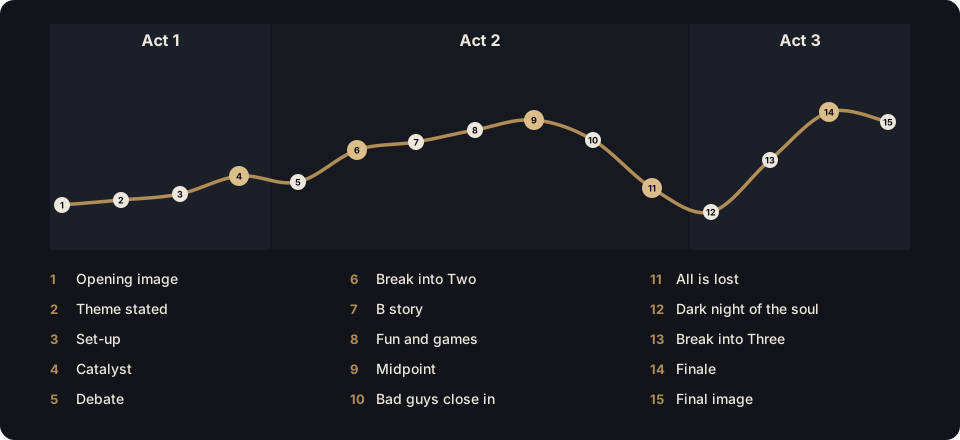
In order, the beats are:
- Opening Image (page 1): a snapshot of the hero's world and tone before the change.
- Theme Stated (around page 5): someone says, often casually, what the story is really about.
- Set-Up (pages 1–10): the hero's life, flaws and what is missing.
- Catalyst (around page 12): the event that disrupts that life.
- Debate (pages 12–25): the hero hesitates; should they go?
- Break into Two (around page 25): the hero makes an active choice and enters a new world.
- B Story (around page 30): a secondary relationship, often the one that carries the theme.
- Fun and Games (pages 30–55): the promise of the premise; what the trailer shows.
- Midpoint (around page 55): a false victory or false defeat that raises the stakes.
- Bad Guys Close In (pages 55–75): external pressure and internal doubt both grow.
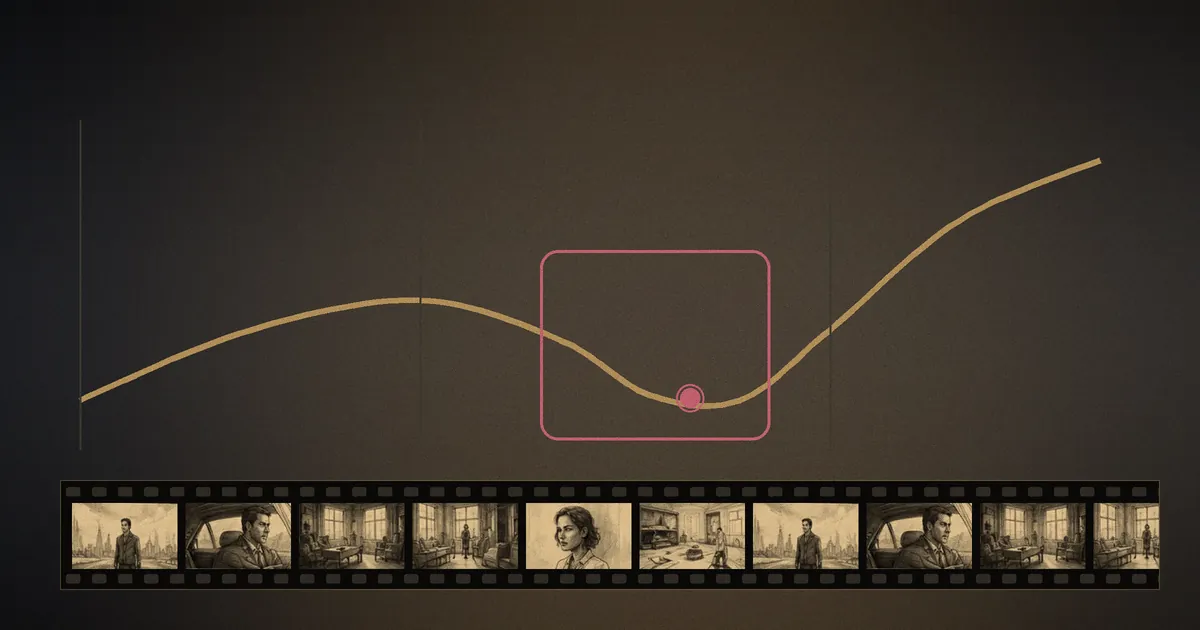
- All Is Lost (around page 75): the lowest point, often with a loss.
- Dark Night of the Soul (pages 75–85): the hero faces what they have been avoiding.
- Break into Three (around page 85): a new idea, usually joining the A and B stories.
- Finale (pages 85–110): the hero applies the lesson and resolves the conflict.
- Final Image (last page): the mirror of the opening, showing what has changed.
This is one model among several. Syd Field's paradigm works with three acts and two plot points; Dan Harmon's story circle has eight stages; the Hero's Journey in its screenwriting versions has twelve; Truby uses twenty-two steps. They overlap heavily, because they describe the same underlying movement: a person wants something, meets resistance, is forced to change, and either succeeds or fails.
How to build a beat sheet for your own story
Do not start by filling in fifteen slots. Start from what you know and work outward.
- Write the premise in one sentence. Include the protagonist, the goal and the opposition.
- Fix the ending. Even a provisional ending tells you what the final image and the finale must pay off.
- Define the "before" and "after" of the hero. What do they believe at the start, and what at the end? The gap is your arc.
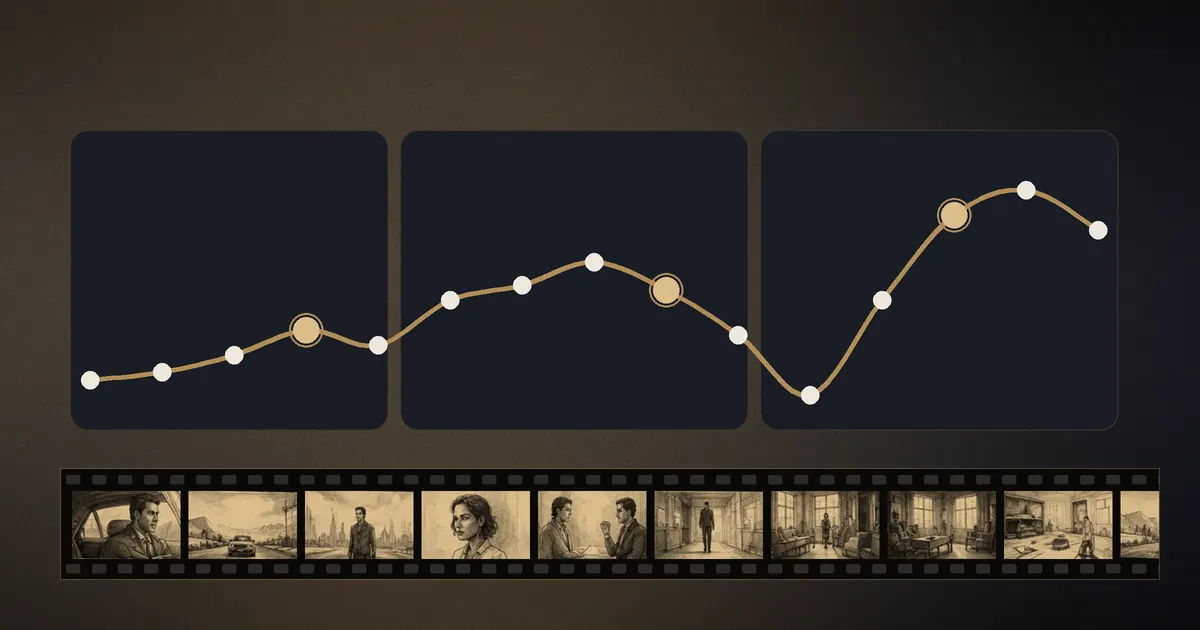
- Place the big turns first: the catalyst, the end of Act One, the midpoint, the low point and the end of Act Two. Everything else hangs from them.
- Fill the gaps in between with the smallest number of beats that keep cause and effect clear. Each beat should lead to the next with "therefore" or "but", not "and then".
- Test every beat. Ask what changes for the protagonist, and what they want in this beat.
Example: a short beat sheet
Example only. Premise: a retired ferry captain must guide a smuggler's boat through a storm to save her estranged daughter.
- Opening Image: Marta ties up her ferry for the last time; no one comes to see her off.
- Catalyst: A stranger offers her a fortune for one night's crossing; her daughter's name is on the manifest.
- Break into Two: She casts off, ignoring the harbour master's radio call.
- Midpoint: She finds the daughter, but the daughter is working with the smugglers. False victory, new stakes.
- All Is Lost: The engine fails; the daughter takes the only lifeboat.
- Finale: Marta steers by the old tide charts she once refused to trust and brings the boat in.
Six lines are enough to test the story. If a beat does not change anything, rewrite it or remove it.
Adapting the beat sheet: feature versus series episode
A feature spreads its beats across about 90–120 pages with a single arc. A television episode compresses the same logic into a smaller frame and usually serves several threads at once.
| Feature | Series episode | |
|---|---|---|
| Length | 90–120 pages | 22–60 pages, depending on format |
| Arcs | One main arc | A-story, B-story, often C-story |
| Structure | Three acts | Teaser and 4–7 acts, depending on the network and platform |
| Ending | Resolves the whole story | Resolves the episode and often leaves a hook |
| Beat sheet | One list | One list per thread, then merged |
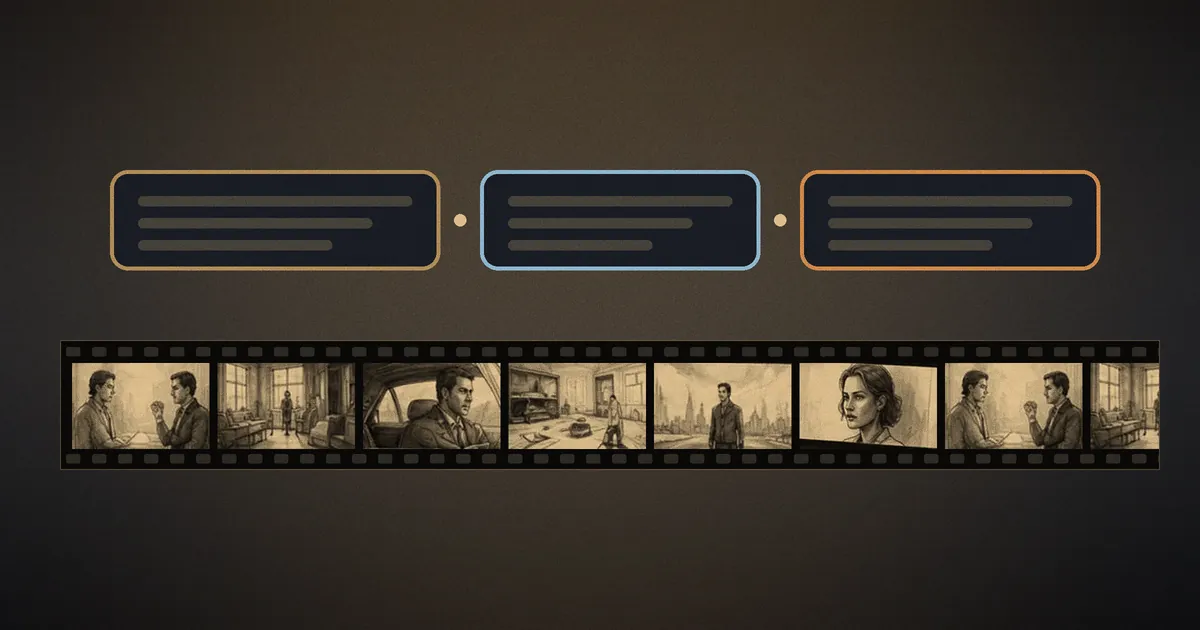
For an episode, build a separate short beat list for each storyline and then interleave them so that act breaks land on strong turns. Streaming episodes often have no commercial breaks, but writers frequently still plan to a similar rhythm. Check the format your show or the platform actually uses; it varies.
Common mistakes
- Beats that are only events. "They travel to the city" is a movement, not a beat. What does the hero lose or learn on the way?
- A passive protagonist. If things happen to the hero for ten beats in a row, the structure may look tidy and still feel inert.
- Treating page numbers as law. A catalyst on page 17 is fine if the script works.
- Too much detail. Once a beat sheet runs to four pages, it has become an outline. Keep the sheet short enough to see at a glance.
- A weak middle. The stretch between the midpoint and the low point is where most scripts lose energy; see our guide to why the second act sags and how to repair it.
STORYGRAPH can import a screenplay and map its structure automatically, which is a quick way to compare the beats you planned against the ones you actually wrote.
Takeaways
- A beat sheet is a one-page list of the story's turning points, each of which changes the protagonist's situation.
- Save the Cat's 15 beats are one popular model; Field, Harmon, Truby and others offer alternatives that describe the same movement.
- Build from the premise, the ending and the hero's arc, then place the big turns, then fill the gaps.
- Page numbers are guidance only; adjust them to your genre and format.
- For a series episode, build one list per storyline and weave them together.